


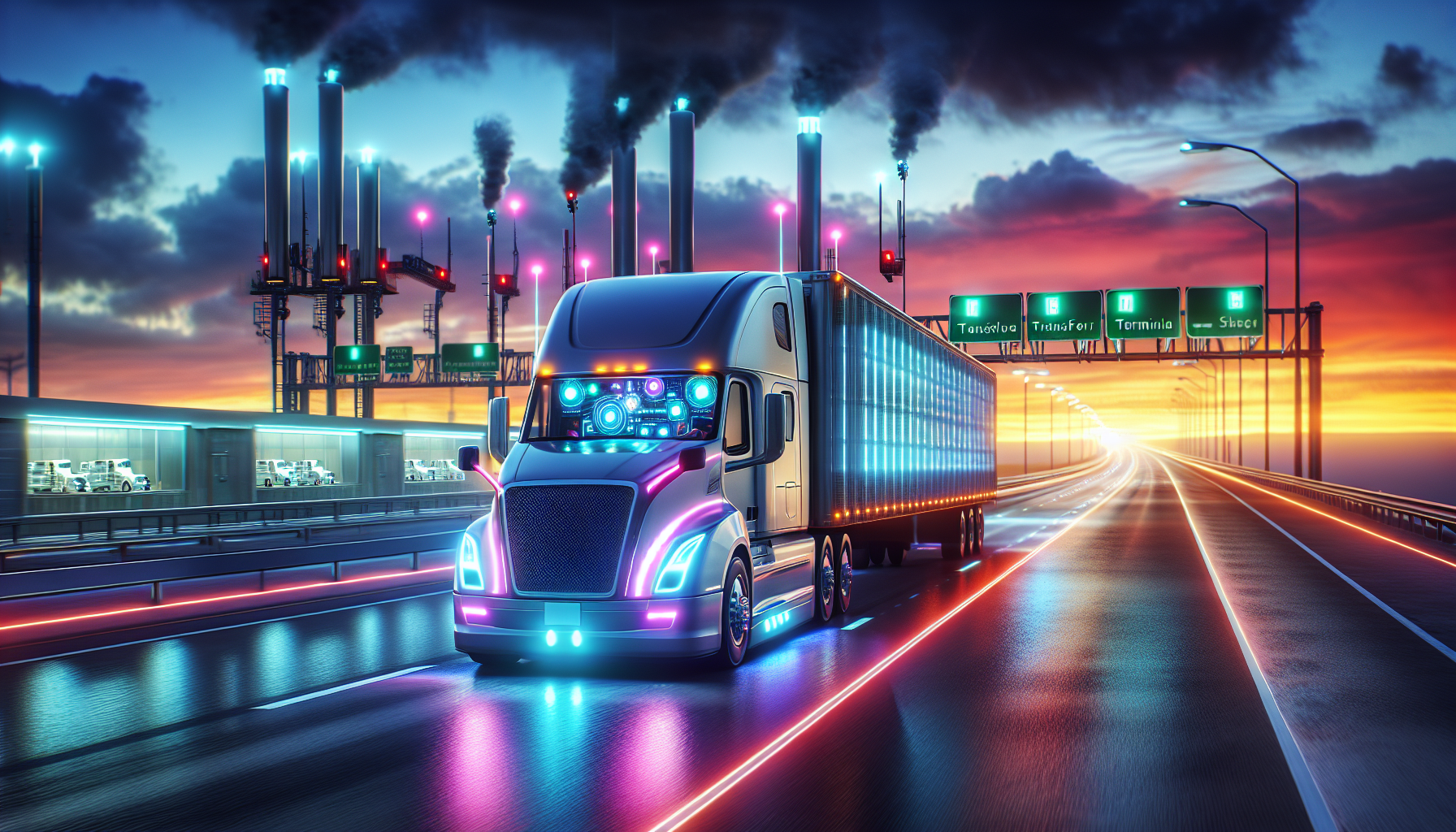
Interstates Go Autonomous, Jobs Get Rewired
The latest wave of coverage says robot rigs will “replace drivers by 2027.” Here’s the better read: the interstate is going autonomous, not the entire job. Soon, Hub-to-hub AI trucks run the boring middle mile; humans shift to yards, terminals, escorts, and remote supervision. The role doesn’t vanish—the route does.

Rigs Without the Red-Eye
Interstate autonomy targets long, predictable stretches where software thrives and humans suffer fatigue. That means night runs and weather windows handled by sensor stacks and redundant braking, while people handle the messy bits—loading docks, city streets, and exception handling. It’s a safety and uptime story, not a sci‑fi coup.
The Middle Mile Gets Cheap—and Always On
Industry models project driver time as the single largest operating cost. Remove hours-of-service constraints on the middle mile and you unlock 24/7 utilization. Even conservative forecasts put autonomous cost-per-mile below today’s human-led long haul once volumes hit scale across a few corridors. Cheaper middle miles compress delivery windows—from days to day-and-a-half—and that changes where warehouses make sense.
Autonomous Interstates, Human Terminals
Expect a buildout of transfer hubs near on/off ramps across Texas, Arizona, and other permissive states. Concurrently, yard drivers and technicians will be in demand at these terminals, with remote operators overseeing small fleets from secure control rooms. If you run a DC far from major corridors, now’s the time to model a satellite node strategy—closer to the interstate means faster turns and lower demurrage.
Safety, Liability, and the Insurance Gatekeeper
The real gate isn’t the gadget; it’s the actuarial table. Autonomy scales when insurers price risk lower than today’s human baseline. That means clean disengagement data, clear fault attribution, and redundant systems that are boringly reliable. Especially, states that codify transparent incident reporting and clear responsibility frameworks will capture the jobs and the tax base.
Unit Economics Over Hype Cycles
If you’re leading a fleet or a logistics SaaS, design for phased adoption: lane by lane, season by season. Explicitly, invest where densities and weather are friendly, and let the numbers speak—fuel efficiency gains, maintenance intervals, and on-time rates. Basically, skip moonshots that need nationwide perfection to pencil out. Fiscal discipline beats press-release aerobics every time.
New Work, New Tools
This isn’t a pink-slip story; it’s a workflow story. Accordingly, training programs will shift drivers toward higher-paid yard ops, escort roles, and remote oversight. Software opportunity: exception management, dynamic hub routing, automated yard orchestration, and claim triage. Furthermore, the winners will productize the handoffs between human judgment and machine endurance.
A Founder’s Checklist
– Map your top five lanes for hub-to-hub readiness: regulations, weather, terminal partners.
– Build a terminal adjacency plan; sublease near ramps before the rush.
– Pilot remote ops playbooks; instrument every handoff for data you can insure.
– Price savings only after redundancy, not before. Take the conservative case and still be happy.
AI Related Articles
- EU AI Act Enforcement Begins: What the New Regulatory Era Really Means for Innovation

- Google’s Gemini Pro 2 Just Changed the Game: What It Really Means

- OpenAI’s GPT-5 Turbo Just Dropped: Smarter Reasoning, Lightning Speed, and What It Really Means

- Why Apple’s Private Cloud Compute and AWS Bedrock Just Changed the Enterprise AI Game

- Open-Source AI Just Leveled Up: What Hugging Face’s Diffusion Hub and Stanford’s FALCON-X Really Mean

- Why Microsoft Copilot Tasks and the OpenAI GPT Marketplace Just Changed Everything About Agentic AI

- Google’s Gemini Ultra 2 vs Meta’s Llama 4 80B: The New AI Arms Race Just Got Interesting

- Google’s Platform 37 Shows AI Is Becoming Public Infrastructure

- UK AI Agents: Ship Fast, Govern Faster

- When Automation Works Too Well: The AI Risk That Silently Deletes Your Team’s Job Skills

- AI Code Assistants Need Provenance: Speed Is Nothing Without Traceability and Accountability

- Clouds Will Own Agentic AI: Providers Set to Capture 80% of Infrastructure Spend by 2029

- The Next Protocol War: Who Owns the Global Scale Computer?

- California Moves to Mandate Safety Standard Regulations for AI Companions by 2026

- AI Search Is Draining Publisher Clicks: What 89% CTR Drops Signal for the Open Web